【Alumni Interview】“A Space Where Everyone Can Feel Comfortable, Just Like Social Apartment”: The Origins of a Japanese Tea Café Opened in Osaka by a Former Resident (Part 2)
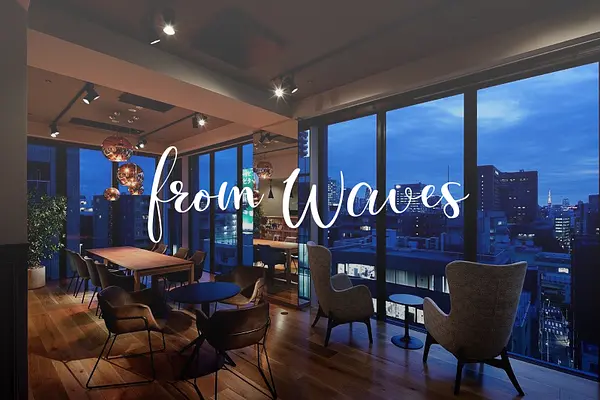
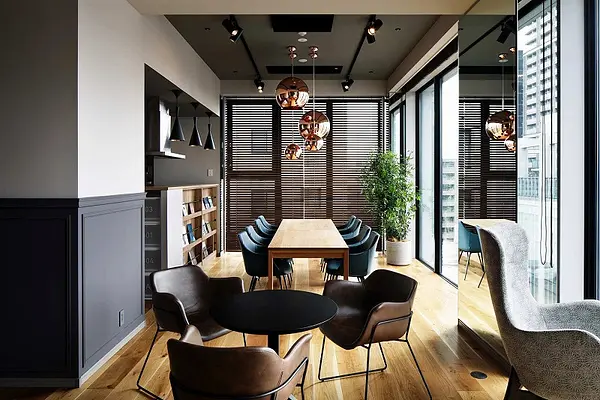
A social apartment is a community-oriented rental building that features not only traditional living spaces but also well-equipped public areas such as lounges. It’s a new lifestyle that “broadens your horizons,” allowing you to enjoy a sense of community with fellow residents while maintaining your privacy.
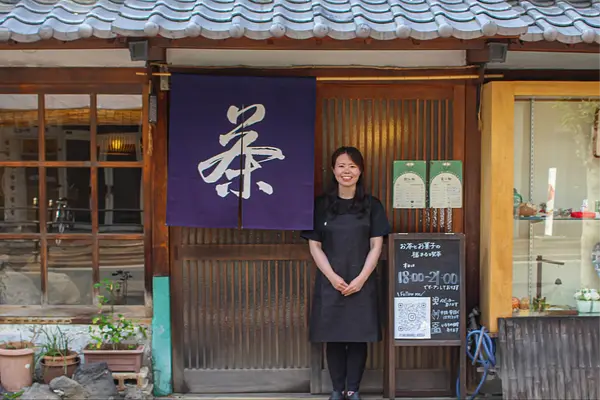
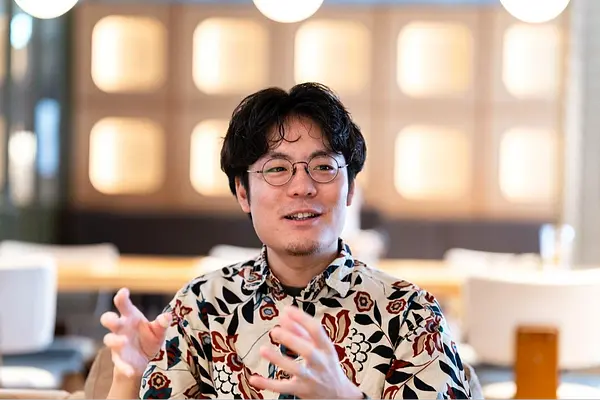
Time spent in a social apartment often goes beyond a mere living experience; it frequently has a significant impact on one’s future life and career choices. For this feature, we spoke with Ms. Sawada, who once lived at “WAVES Nihonbashi Hamacho.” After moving out of the social apartment, Ms. Sawada opened “Fukumaru Kissa,” a casual café specializing in Japanese tea and traditional sweets, in a residential neighborhood in Osaka.
In Part 1, we looked back on his days as a resident of the social apartment, where he discovered the appeal of becoming the “one who entertains” within a flat, title-free social environment. In Part 2, we’ll hear the story behind the birth of “Fukumaru Kissa”—a tea and Japanese sweets café that took over a historic space—as well as Ms. Sawada’s future vision for creating a space where everyone, regardless of whether they have a disability or not, can feel comfortable.
Click here for Part 1 👇
【Alumni Interview】“A Space Where Everyone Can Feel Comfortable, Just Like a Social Apartment”: The Origins of the Japanese Tea Café Opened in Osaka by a Former Resident (Part 1)
An Encounter with a 50-Year-Old Former Sushi Restaurant: The Journey to Opening a Japanese Tea Café
— —And so, “Fukumaru Kissa,” a tea and wagashi café, opened in a residential neighborhood in Osaka. I heard there was a dramatic story behind its opening. Please tell us what sparked it.
Ms. Sawada: When I returned to my parents’ home for the New Year’s holidays, I happened to notice a “Closed for Business” sign on a local sushi restaurant that had been in business for 50 years while I was heading out for lunch. Standing in front of the shop, looking rather forlorn, was the gray-haired owner. Later, when I passed by the shop again, I sensed someone inside, so I felt drawn to open the old sliding door and blurted out, “Have you closed the shop?”
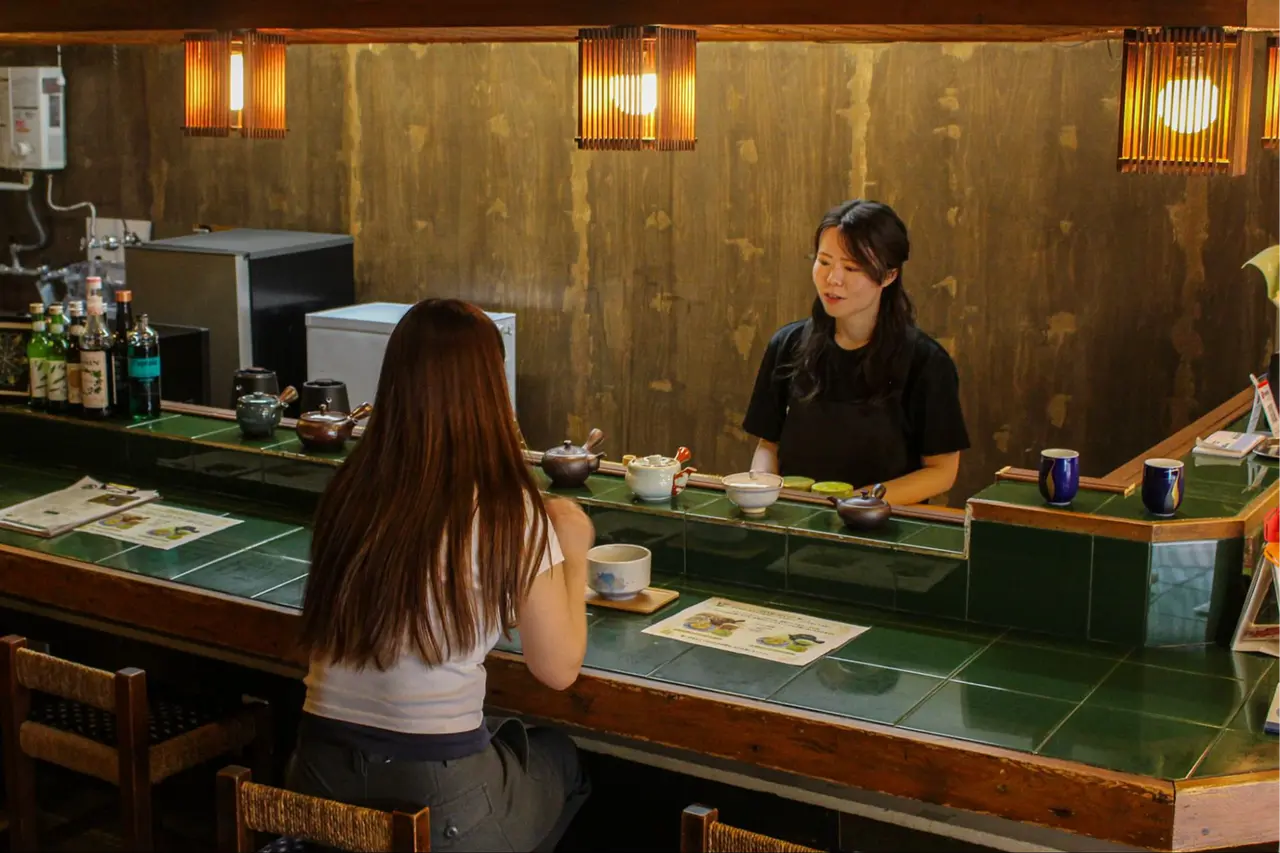
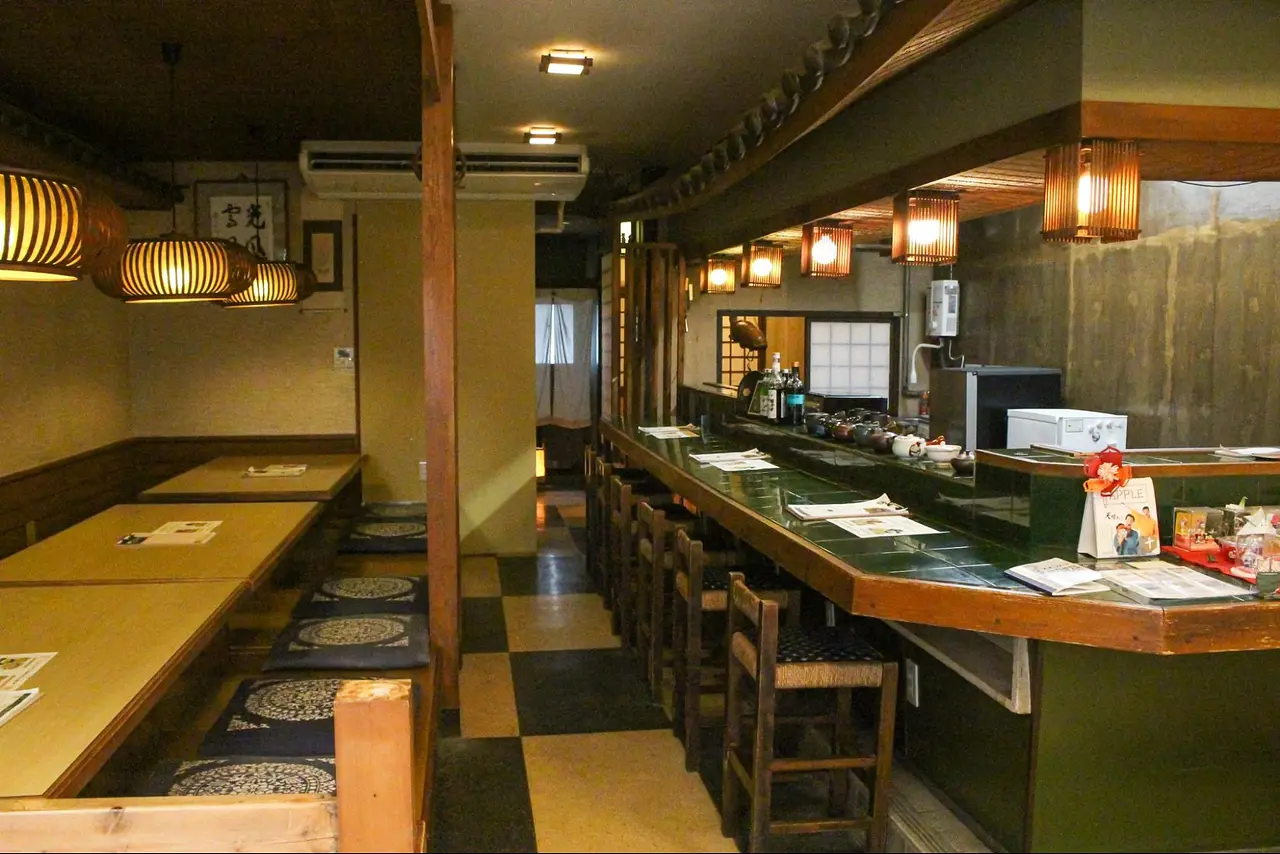
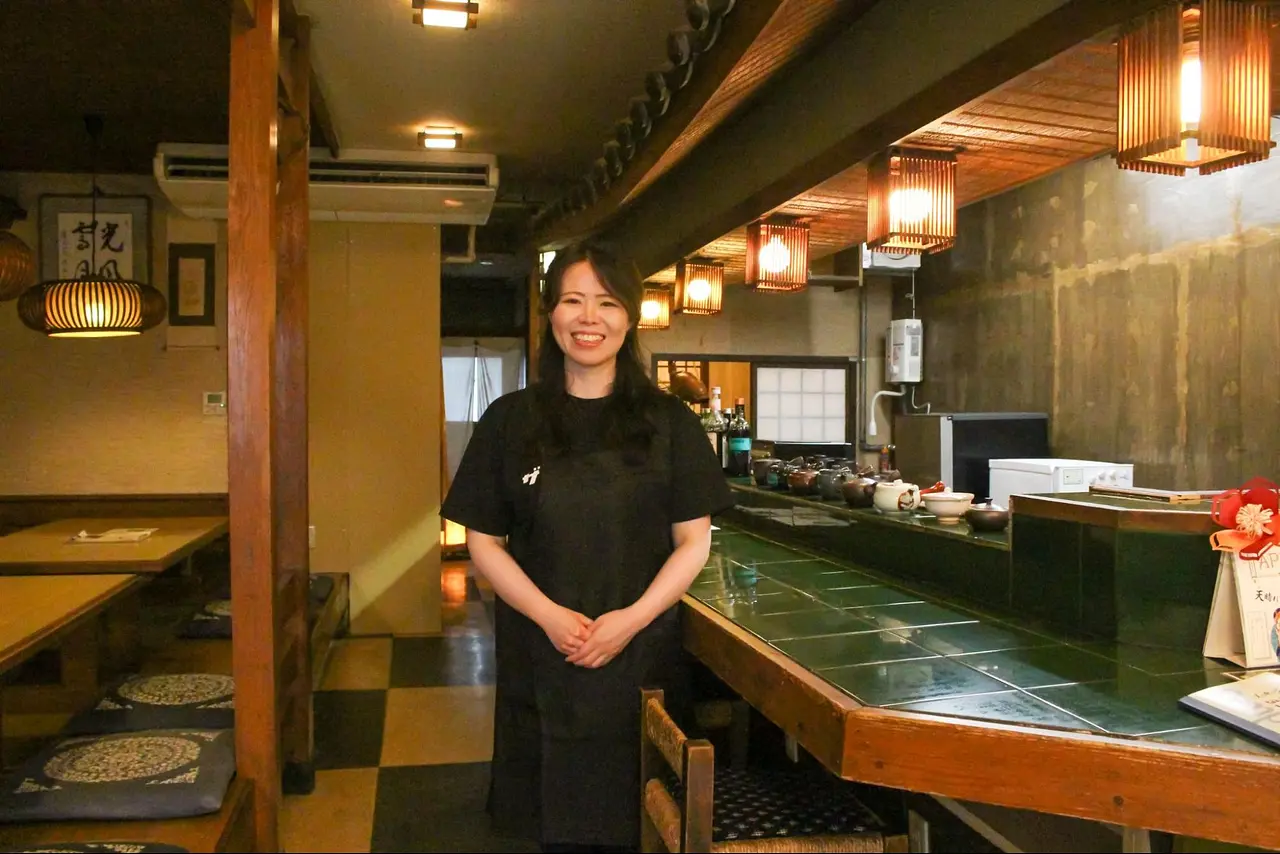
As soon as I stepped inside, I was greeted by a warm and beautiful traditional Japanese space, filled with the craftsmanship of the owner—complete with traditional roof tiles and a pond. The moment the owner told me, “I closed it after 50 years to rent out the space, but I just haven’t been able to find a tenant,” a fierce determination welled up deep inside me: “This wonderful space absolutely must not be lost—I have to do something about it.” Before I knew it, without thinking about the consequences, I declared right then and there, “I’ll make it happen!” (laughs).
—So you were truly driven by intuition. How did that lead to the concept of a Japanese tea café?
Ms. Sawada: I quit my job and returned to Osaka after deciding to take over the shop, but of course, I didn’t know how to make sushi. At first, I had absolutely no idea what kind of business to run. I was just brainstorming ideas, driven solely by the desire to “preserve this wonderful space and turn it into a place where people can gather.”
What gave me the inspiration at that time was, as you might expect, my life in a social apartment. Through conversations with a diverse group of people in the lounge, I experienced firsthand that “when there’s good food, people naturally gather and enjoy talking,” and that “when there are people close by who are passionately pursuing what they love, it gives me energy, too.”
When I conducted market research in the area, I found that while there were plenty of places serving coffee nearby, there were very few casual spots where people could relax and enjoy tea. The matcha trend was already taking off, it fit perfectly with the shop’s traditional Japanese atmosphere, it wouldn’t overlap with other businesses, and with an eye toward future inbound tourism demand, I deliberately chose the concept of a tea and sweets café that doesn’t serve coffee.
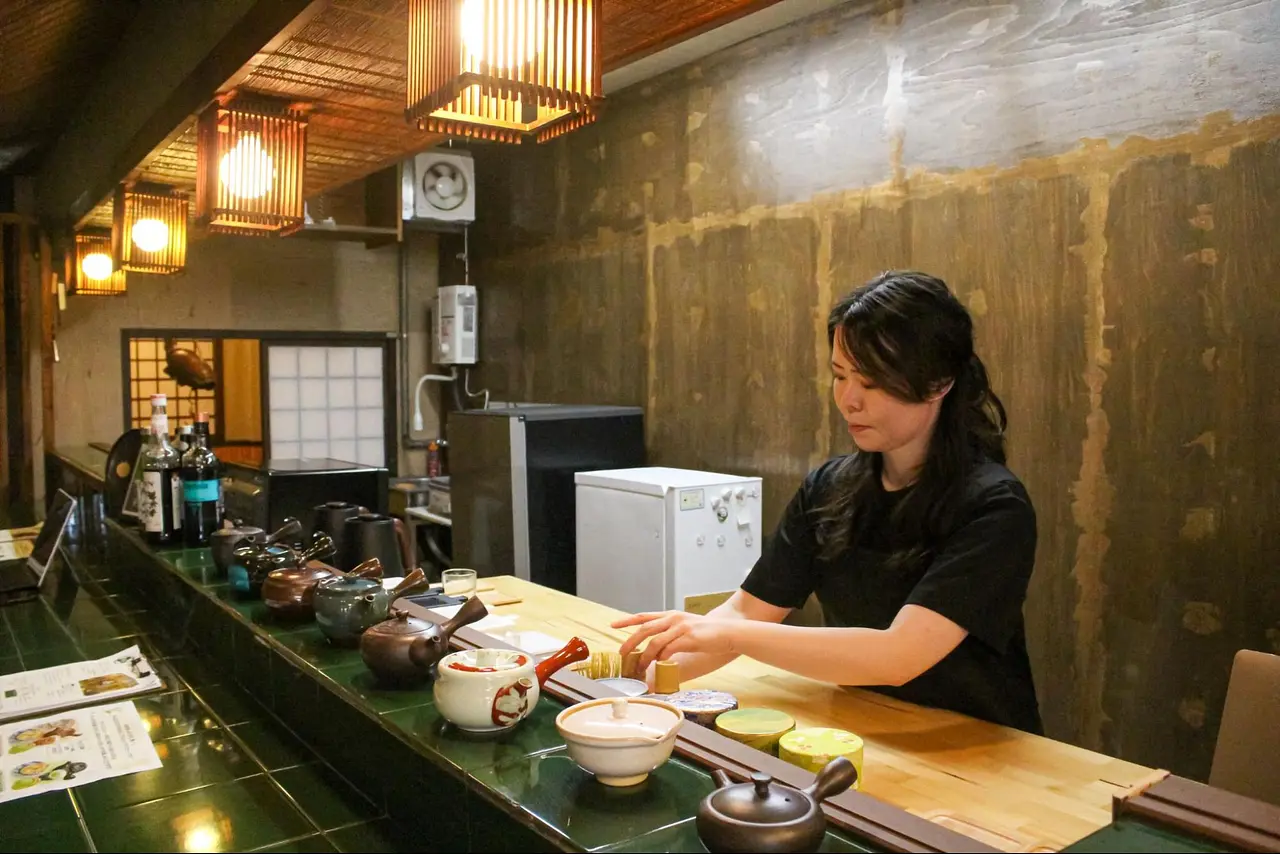
The shop also features a room with a stunning irori (traditional Japanese hearth) and counter seating that makes it easy to chat with staff or neighboring guests. I realized that by capitalizing on these charms to create a café where people can casually enjoy tea and Japanese sweets, we could design a comfortable space—much like the lounge in a social apartment—where all kinds of people could naturally connect.
—So the concept was also inspired by life in a social apartment. The menu is colorful and everything looks delicious—which items are the most popular?
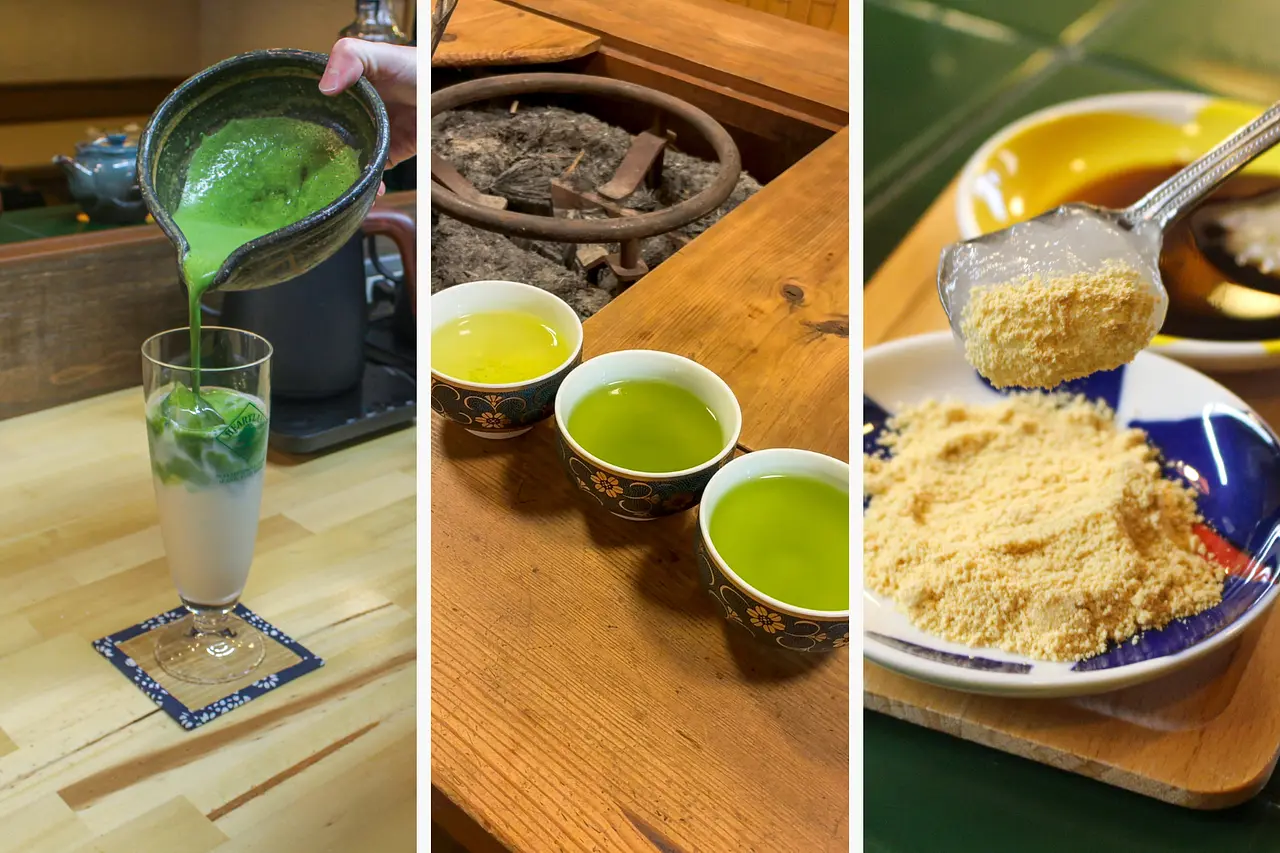
Ms. Sawada: The most popular items are our special matcha latte and the sencha tea set, which lets you enjoy three different flavors at once. Also, our freshly made, warm “warabi mochi”—prepared to order—is slowly gaining a reputation through word of mouth. We wanted customers to feel that “special value you can only experience at our shop,” so we were particular about the name “Freshly Made Warabimochi”—a way of serving it warm that you don’t see very often elsewhere.
▲Left: Our most popular matcha latte / Center: A tasting set featuring three types of sencha / Right: Freshly Made Warabi Mochi, served warm
Creating a Space Where Everyone Can Relax, Like a Social Apartment
—Please tell us about the philosophy you value most in running “Fukumaru Café.”
Ms. Sawada: My goal is to create a space where everyone feels comfortable. I want it to be a place where children, adults, and foreign nationals—and, of course, people with disabilities—can all relax. It all started with a partnership with a bakery that employs a baker with a hearing impairment. Through my interactions with that bakery, I began to think deeply about what kind of space would be accessible to everyone.
However, rather than limiting it to a facility that’s explicitly “barrier-free for people with disabilities,” I want it to be, above all, a casual and comfortable café where anyone can drop by spontaneously. I wanted to create a place where, within that foundation of comfort, people with disabilities and local residents without disabilities can blend together like a gradient.
――What specific measures have you taken?
Ms. Sawada: To lower the barrier to entry as much as possible, we first clearly state on Instagram and on our storefront sign that “we can communicate via sign language or written notes.”
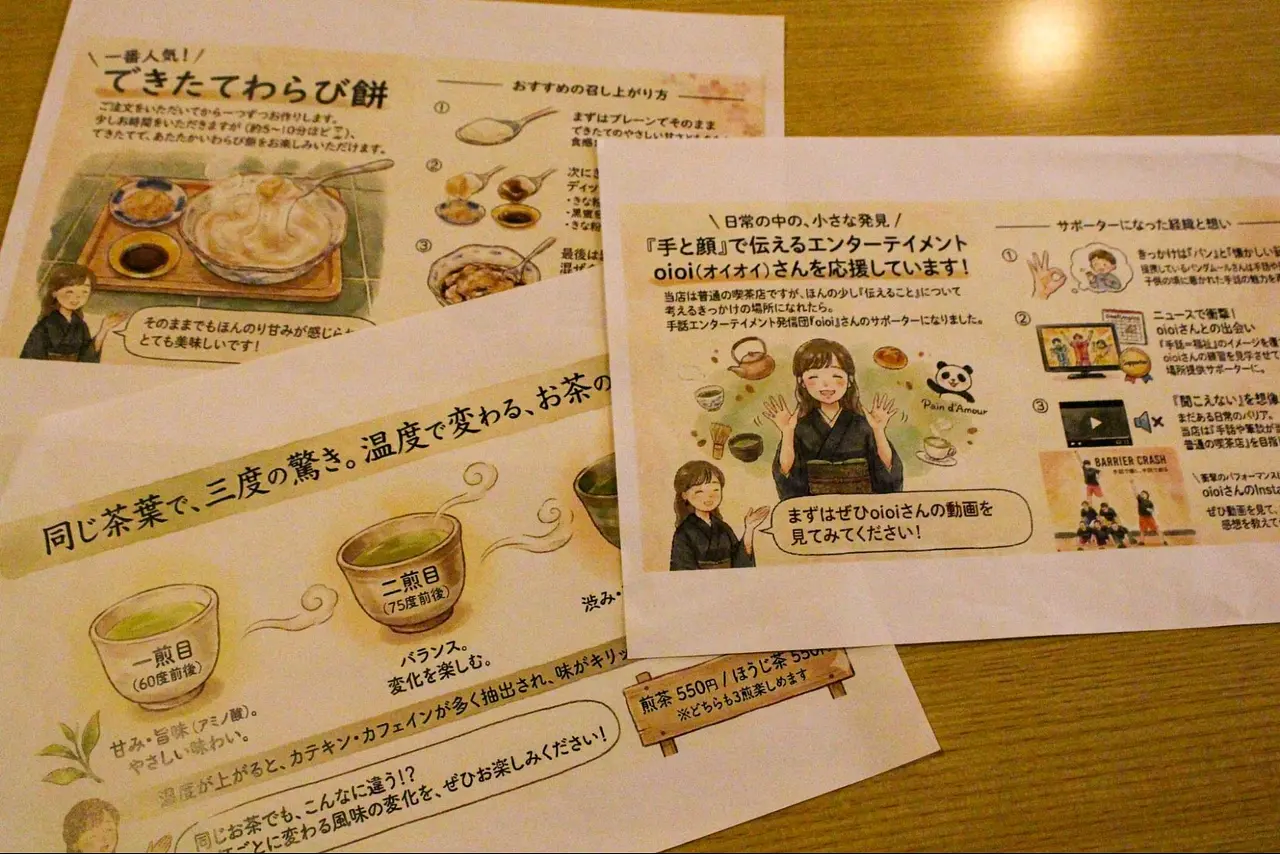
We’ve also numbered all items on the menu to make ordering easier, and we’ve placed materials at every table that visually explain how to enjoy our tea in an easy-to-understand way. Since we started these initiatives, word of mouth and social media have brought in many customers with hearing impairments from far away who say, “I can relax here with peace of mind.”
▲Each seat is equipped with materials explaining how to enjoy the tea and sweets, as well as the restaurant’s initiatives
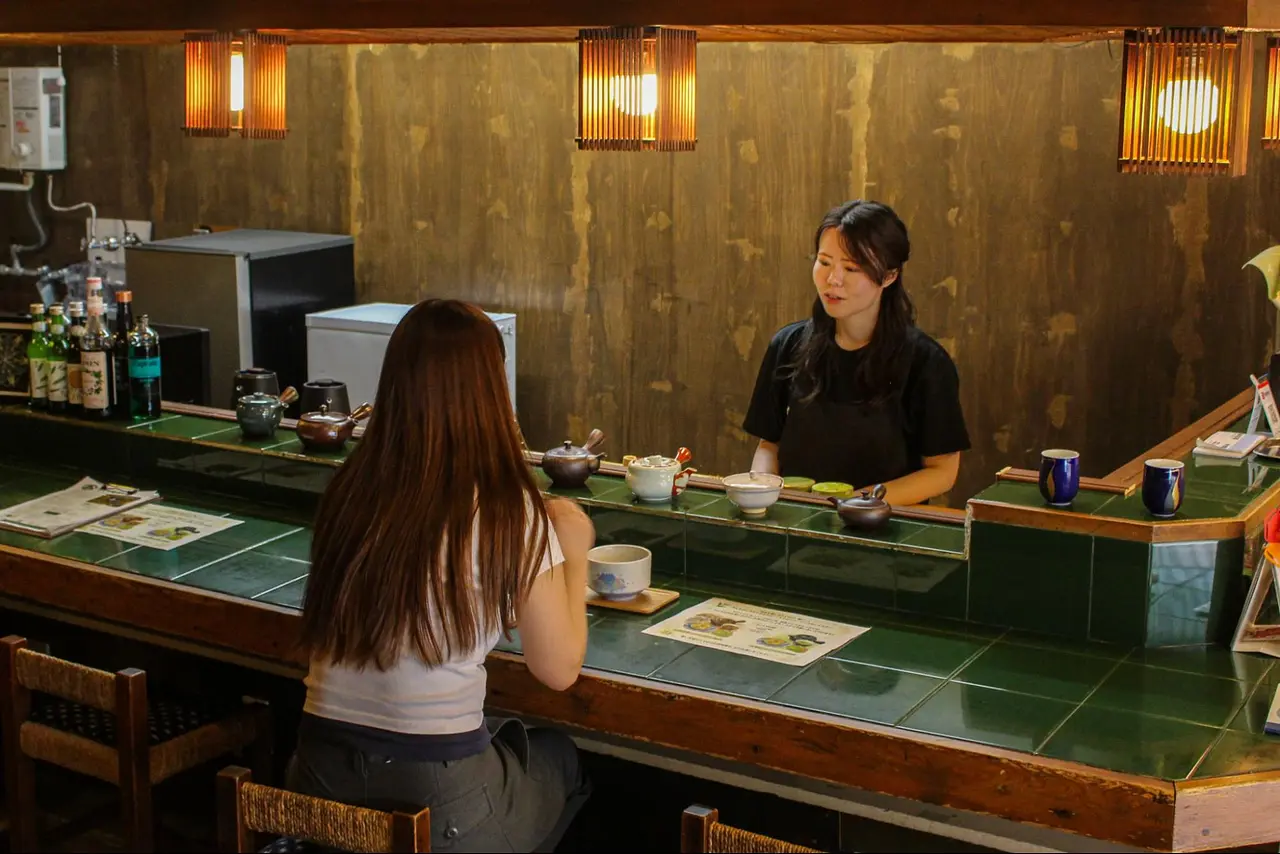
—That’s a wonderful initiative. The counter, which retains the feel of a traditional sushi restaurant, seems like the perfect space for casual conversation and interaction.
Ms. Sawada: You’re absolutely right! When I chat with customers at the counter—from retirees to parents in the thick of raising children who’ve come in for a little breather—a truly diverse group of people share their worries and the joys of their daily lives with me.
There, job titles don’t matter at all. Everyone returns to their true selves and enjoys genuine conversation. This is exactly the kind of communication I experienced every day in the lounge at “WAVES Nihonbashi Hamacho.” I believe it’s precisely because of my experience with social apartments that I’ve been able to confidently recreate this warm atmosphere in a café.
――It seems like your passion for “creating a welcoming atmosphere,” Ms. Sawada, is set to grow even further. Could you tell us about your future plans?
Ms. Sawada: I want to continue organizing more and more events and initiatives through the café that allow first-time customers to naturally interact with one another. Actually, right now, I’m collaborating with the organizer of the Christmas party we held when we first moved in to create an original card game centered on the theme of “hospitality”—something I’ve come to appreciate while running this café. We’re aiming for a game with simple rules—one that anyone can enjoy intuitively, just like a deck of playing cards—and we’re hard at work developing it, with the goal of completing it around September of this year!
――A card game! What kind of message are you trying to convey through it?
Ms. Sawada: Through the game, I hope players will become aware of the “spirit of caring for others,” think about how to deepen that compassion, and find an opportunity to “see the other person as they truly are,” setting aside their titles and roles. Once it’s finished, I’d be thrilled if we could place copies in the lounges of our Social Apartment properties so residents can use them as a way to connect with one another (laughs).
For those of you ready to take a new step forward: Social Apartment is a place that gives you that little push you need.
――Finally, please share a message for those considering moving into a Social Apartment!
Ms. Sawada: I really hope you’ll give it a try at least once! Actually, we once had a customer at the café who said, “I used to live at Social Apartment, too!” You never know where connections will be made—it’s a truly mysterious kind of fate.
It’s a place full of experiences and encounters you simply can’t get living alone. You’ll meet people you’d never have met otherwise, get inspired, and something will happen. I don’t know exactly what, though! I’m sure you’ll have some doubts before moving in, but please muster up the courage and take the plunge. You’ll have stories from that experience to share for the rest of your life (laughs)!
Click here for Part 1 👇
【Alumni Interview】“A Space Where Everyone Can Feel at Home, Like a Social Apartment”: The Origins of a Japanese Tea Café Opened in Osaka by a Former Resident (Part 1)
(Interview & Text: Ichikawa / Photography: Fukushima)















!["How’s The Community Actually?" - The Atmosphere of Community Revealed Through Various Living Experiences [Interview]](https://sa-site-production-strg.s3.ap-northeast-1.amazonaws.com/n95c5ksoi29szp2v8mgip1f6c58n)
![[Resident Interview] From Speaking Zero Japanese to Achieving Conversational Level in Just 6 Months by Living in a Social Apartment](https://sa-site-production-strg.s3.ap-northeast-1.amazonaws.com/jxzizvaqsxi3ips1j47dkwk4savp)
![大阪3物件の入居経験者に聞いた"オープニングメンバー"の魅力とは? | ネイバーズ江坂 [インタビュー]](https://sa-site-production-strg.s3.ap-northeast-1.amazonaws.com/puv95v62ik8u6yohuennujfun2x5)
![ワールドネイバーズカフェ護国寺で働くスタッフの想い | ワールドネイバーズ護国寺 [インタビュー]](https://sa-site-production-strg.s3.ap-northeast-1.amazonaws.com/jm7qhnahwy58tujy6eme4vt0gaqw)
![ソーシャルアパートメントはロールモデルの宝庫。就活後に入居を決めた理由とは<後編> | ネイバーズ東十条 [インタビュー]](https://sa-site-production-strg.s3.ap-northeast-1.amazonaws.com/0klh7ktq1j5yrpyx0ob5rbo6fzcj)
![ソーシャルアパートメントはロールモデルの宝庫。就活後に入居を決めた理由とは<前編> | ネイバーズ東十条 [インタビュー]](https://sa-site-production-strg.s3.ap-northeast-1.amazonaws.com/0imxikh39n29q5cjimjm74y0zrab)
![「やってみたい」を一緒に叶える仲間と繋がる暮らし。4物件80人で実現した大運動会 | ソーシャルアパートメント宮前平 [インタビュー]](https://sa-site-production-strg.s3.ap-northeast-1.amazonaws.com/r8nyxbs5rhoyffd6f0szce0innpf)
![必要なのは好奇心と少しの思い切り | ネイバーズ五反田 [インタビュー]](https://sa-site-production-strg.s3.ap-northeast-1.amazonaws.com/y0z69d53xmqqp0hex5mhpi7h0lm0)
![きっかけは幼なじみのInstagram?一歩踏み出すのは誰かの些細な一言 | ネイバーズ立川 [インタビュー]](https://sa-site-production-strg.s3.ap-northeast-1.amazonaws.com/eowkeclvq9pekszwtklhjl9buecw)
![幅広い年齢層・国籍が交差する環境で学生時代を過ごすということとは<後編> | ワールドネイバーズ護国寺 [インタビュー]](https://sa-site-production-strg.s3.ap-northeast-1.amazonaws.com/ikafi958yqy8p1x1h7paxvnwvql7)
![幅広い年齢層・国籍が交差する環境で学生時代を過ごすということとは<前編> | ワールドネイバーズ護国寺 [インタビュー]](https://sa-site-production-strg.s3.ap-northeast-1.amazonaws.com/l92j1wrnana2kr0yrn14u88tqzlq)
![上京時にソーシャルアパートメントという選択肢 | ソーシャルアパートメント大泉学園 [インタビュー]](https://sa-site-production-strg.s3.ap-northeast-1.amazonaws.com/g92g4p92trjignuw87ae1msetxap)
![自然な交流を生み出す住まいに魅せられて | ソーシャルアパートメント三鷹 [インタビュー]](https://sa-site-production-strg.s3.ap-northeast-1.amazonaws.com/gijfv37vtenl104ol5f2mj040hwa)
![特技はヴィーガンチーズケーキ作り?料理をとことん楽しむ吉祥寺暮らし | ネイバーズ井の頭公園 [インタビュー]](https://sa-site-production-strg.s3.ap-northeast-1.amazonaws.com/3modm8zsssu2pb0h8jueaqdgo6wi)
![男性2人に聞いた、暮らしの一問一答 | ターミナルズ高槻 [インタビュー]](https://sa-site-production-strg.s3.ap-northeast-1.amazonaws.com/bo8eqs8prxj8umurpgb56sdubsld)
![男女ペアに聞いた、暮らしの一問一答 | ターミナルズ高槻 [インタビュー]](https://sa-site-production-strg.s3.ap-northeast-1.amazonaws.com/dmiopgitie2z3v8c60al680ggb4t)
![女性2人に聞いた、暮らしの一問一答 | ターミナルズ高槻 [インタビュー]](https://sa-site-production-strg.s3.ap-northeast-1.amazonaws.com/nwj20uazpp4waybl9666o46lb83f)
![「意図せず交流が生まれる場」.andworkとSOCIAL APARTMENTの共通点 | FILMS和光 [インタビュー]](https://sa-site-production-strg.s3.ap-northeast-1.amazonaws.com/5j2xtbaeo1w6ok4uc1b5hmfex5tp)
![入居者約60人を集めた「ボディメイキング コンテスト」主催者が語る企画の裏側 | ワールドネイバーズ護国寺 [インタビュー]](https://sa-site-production-strg.s3.ap-northeast-1.amazonaws.com/wftnprnselp6cg7byzf4hezs1j03)
![幼なじみと入居したソーシャルアパートメントでの暮らし | ターミナルズ高槻 [インタビュー]](https://sa-site-production-strg.s3.ap-northeast-1.amazonaws.com/4dwlhvri1wiz3j9mx7sv7fkoosoj)

![日本とアメリカを繋げることができたら | ネイバーズ渋谷神山町 [インタビュー]](https://sa-site-production-strg.s3.ap-northeast-1.amazonaws.com/f64gkjxghdo46gco54pf1xl4ewro)
![[New Property: NEIGHBORS YOKOHAMA TSURUMI] 1st Pre-Opening Tour](https://sa-site-production-strg.s3.ap-northeast-1.amazonaws.com/1jslzzmsoujaiqo4hoo77em5alnn)